
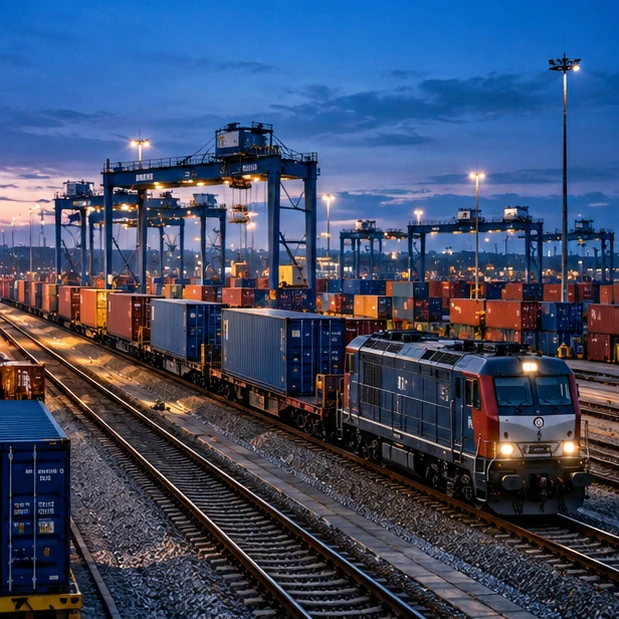
Rail can work well for containers and heavier, predictable freight flows. Its usefulness depends on service frequency, terminal access and the cost of moving goods to and from the train.
Choose the rail product that exists on the corridor
Confirm there is a suitable rail connection and a terminal able to handle the required container or wagon type.
Account for terminal handling
Quote the complete chain: road pre-carriage, terminal lifts, rail line haul, destination terminal and final-mile delivery.
Plan around fixed schedules
Check wagon payload, loading gauge, commodity restrictions and cut-off times rather than assuming road freight dimensions transfer to rail.
Compare end-to-end, not only rail kilometres
Ask how missed connections, terminal dwell and timetable changes will be handled in the proposed route.
Questions worth checking
- Validate rail terminals at origin and destination
- Check container or wagon loading limits
- Confirm departure frequency and cut-offs
- Include pre-carriage and on-carriage costs
The rail terminal is only part of the route
A container arriving by sea and moving to a rail-served inland market still needs drayage to and from terminals. Compare cut-offs, available equipment, intermodal terminal charges and the final road leg against a direct truck move.
Check whether the operator quotes rail linehaul only or includes terminal lifts, customs transit, container storage, final chassis and return. Project cargo and overweight units may not fit standard wagon or lift arrangements.