
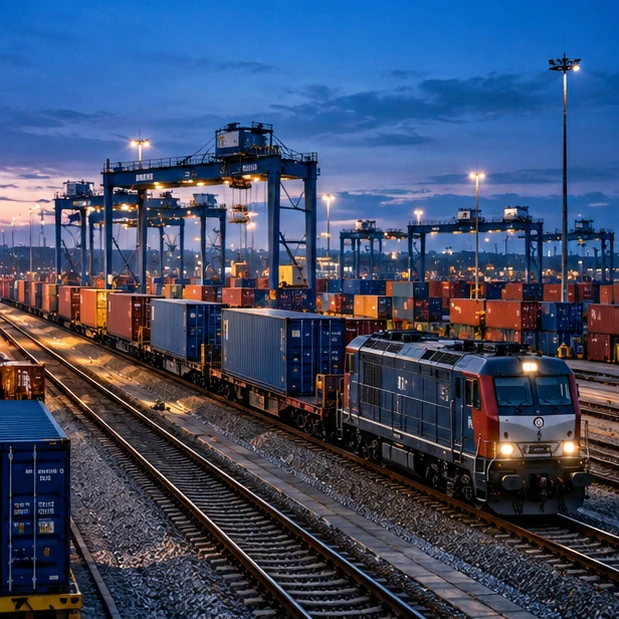
A multimodal movement is judged by its handovers. Good planning identifies who controls each transfer, which documents follow the cargo and where delays or damage risks can arise.
Treat the journey as one chain
Map every leg from the factory or warehouse to the final delivery point, including terminals and storage time.
Clarify who contracts with whom
Confirm whether there is one contracting operator or several separate carriers: responsibility may change at each handover.
Give each handover an owner
Container size, loading method, product sensitivity and customs status must be compatible with each part of the route.
Optimise for reliability, not just distance
Allow for transfer cut-offs, transhipment time and the possibility of missed connections when comparing transit estimates.
Questions worth checking
- Record each interchange point and cut-off
- Confirm contractual liability and cargo insurance
- Check shipment visibility expectations
- Ask for a single consolidated cost breakdown
Every handover needs an owner
A shipment moving by vessel, rail and road can have three different operators before reaching the warehouse. A single quoted price is useful only if each transfer, document exchange and exception is assigned to a responsible party.
Map every gateway: who releases cargo, who moves it from terminal, where customs occur, and which party accepts damage claims at each transfer. Check whether container tracking is actually available from contracted carriers.