
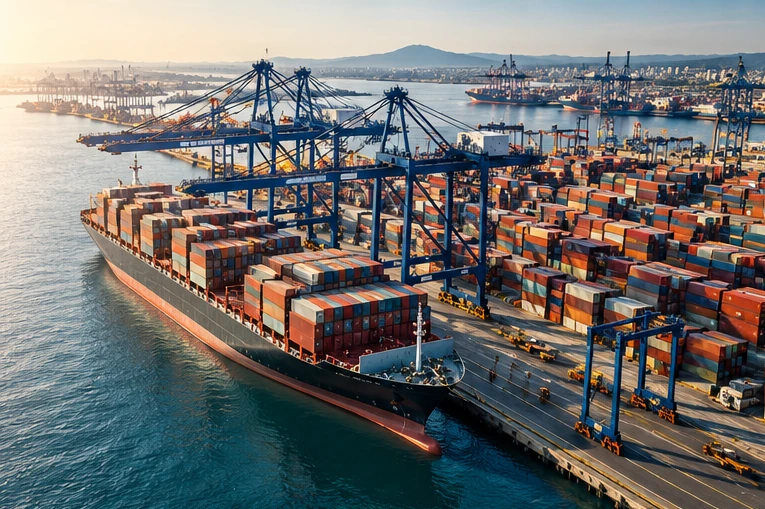
The Canadian gateway has to match the consignee’s region. Vancouver gives a Pacific-facing option; Montréal serves a different network, and cross-border road transport from the United States is a third planning track with its own customs paperwork.
Seaports and air cargo gateways
British Columbia deliveries may be handled through Vancouver, whereas Quebec and Ontario movements need a careful comparison of eastern gateways and long-distance inland transport. Winter conditions and appointments can matter even when a port schedule appears workable.
Selected sea gateways used for initial planning: Vancouver (CAVAN), Montreal (CAMTR). These codes are location references, not proof of a particular vessel call or a terminal booking. Airports worth checking for a relevant cargo schedule include YYZ, YVR (IATA). Confirm live service, terminal, restrictions and airport cargo facilities before booking.
Where the cargo actually needs to go
Toronto-area distribution, Montréal’s manufacturing network and western resource or industrial destinations generate different handling needs. A consignee in Alberta is not served by the same final-mile assumptions as one in the Greater Toronto Area.
Inland-delivery detail that belongs on the booking instruction: Specify province, postal code, importer identity, CARM/broker setup, goods classification and whether a land-border crossing is involved. A port or airport name alone is not an adequate delivery address; include the consignee's receiving rules in the first quote request.
Choosing sea, air, road or intermodal
Deep-sea container freight, transborder trucking and air cargo through Toronto or Vancouver all serve distinct shipment profiles. Identify whether a load crosses a land border and who is responsible for border filings and release before recommending a mode.
Confirm the importer-of-record arrangement and whether CARM registration and financial security arrangements are needed. Goods subject to food, plant or other agency controls require additional checks beyond CBSA declaration.
Customs responsibility and documents
CBSA’s commercial import guide covers the importer business number and RM account, tariff classification, release and the CARM system. Trade agreement eligibility and product-agency requirements depend on commodity, origin and paperwork.
Agree in writing who is the importer/exporter of record, who prepares declarations, and who pays duties, handling and destination fees. Commodity classification, origin and any required licence must be checked against current official instructions; this guide does not provide a customs decision.
A practical route-planning example
For spare parts bound for an Ontario production line, compare air cargo to YYZ with a scheduled ground option from a U.S. supplier. For Pacific-origin inventory going into British Columbia, Vancouver plus local drayage may be a more suitable starting calculation.
Make the rate comparison consistent: same packed goods, same origin and delivery point, same Incoterms® rule, same expected delivery condition and a clear list of excluded charges. Published transit times and prices have intentionally not been guessed here.
Official references and editorial checks
Reference details were reviewed for this editorial update on 25 October 2026. Authority rules, terminal services, code assignments and import restrictions can change. Check the official source and your appointed broker or carrier before a shipment is tendered.
Related tools and next reading
For a Canada shipment, use the appropriate mode guide and calculator to prepare dimensions before approaching a provider. These links help with planning; they do not represent live capacity or an approved booking.