
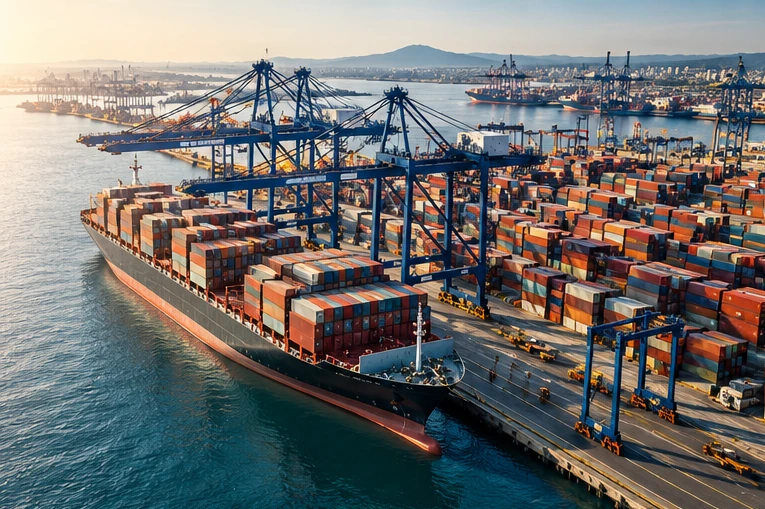
New Zealand is a two-island delivery market. Auckland and Tauranga are useful North Island gateways, while South Island consignments need their own inter-island or direct-entry plan.
Seaports and air cargo gateways
Auckland and Tauranga are not equivalent for every North Island receiver. Deliveries to Christchurch, Dunedin or a remote agricultural site need a South Island and possibly ferry or domestic onward transport decision.
Selected sea gateways used for initial planning: Auckland (NZAKL), Tauranga (NZTRG). These codes are location references, not proof of a particular vessel call or a terminal booking. Airports worth checking for a relevant cargo schedule include AKL, CHC (IATA). Confirm live service, terminal, restrictions and airport cargo facilities before booking.
Where the cargo actually needs to go
Food, agricultural equipment and industrial parts often raise packaging or biosecurity questions. The exact receiving depot and whether an item has been used outdoors can affect how a shipment is presented for inspection.
Inland-delivery detail that belongs on the booking instruction: Request exact island and town, cargo cleanliness/treatment records, biosecurity exposure, entry-party responsibilities and any rural-delivery constraints. A port or airport name alone is not an adequate delivery address; include the consignee's receiving rules in the first quote request.
Choosing sea, air, road or intermodal
Ocean containers carry planned inventory; air cargo through Auckland can suit carefully selected urgent items. Distribution across the two islands must be priced realistically, especially for bulky or restricted cargo.
Used machinery and wooden dunnage may require detailed biosecurity treatment or inspection records. An inland rural consignee may have limited unloading access, so ask about forklift and truck turning radius.
Customs responsibility and documents
New Zealand Customs requires commercial shipments to be cleared and refers traders to entry filings and prohibited or restricted goods requirements. Biosecurity New Zealand/MPI controls may be separately relevant; check both agencies before shipping untreated wood or plant-related goods.
Agree in writing who is the importer/exporter of record, who prepares declarations, and who pays duties, handling and destination fees. Commodity classification, origin and any required licence must be checked against current official instructions; this guide does not provide a customs decision.
A practical route-planning example
A container for an Auckland importer can begin with Auckland or Tauranga gateways. An equivalent shipment for Christchurch requires a southern distribution plan and a check of sea versus domestic onward costs.
Make the rate comparison consistent: same packed goods, same origin and delivery point, same Incoterms® rule, same expected delivery condition and a clear list of excluded charges. Published transit times and prices have intentionally not been guessed here.
Official references and editorial checks
Reference details were reviewed for this editorial update on 25 October 2026. Authority rules, terminal services, code assignments and import restrictions can change. Check the official source and your appointed broker or carrier before a shipment is tendered.
Related tools and next reading
For a New Zealand shipment, use the appropriate mode guide and calculator to prepare dimensions before approaching a provider. These links help with planning; they do not represent live capacity or an approved booking.