
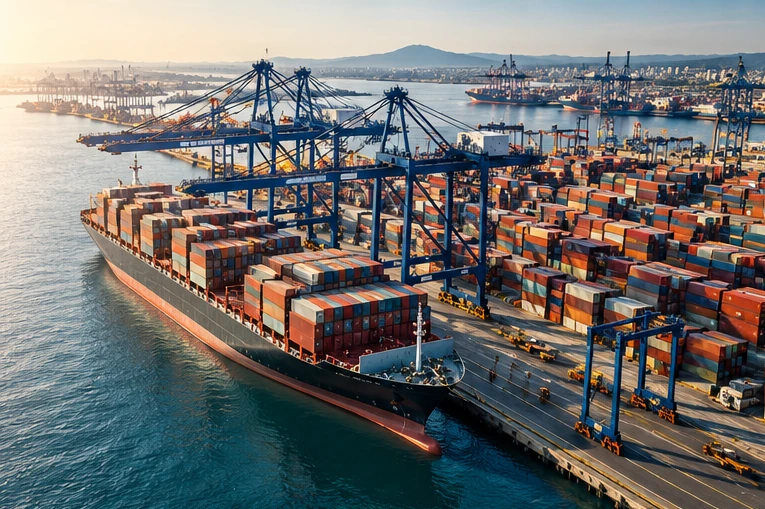
Japan requires exact terminal and consignee arrangements, particularly in dense urban areas. Tokyo/Yokohama and the Osaka–Kobe area are different entry and delivery markets, not interchangeable labels.
Seaports and air cargo gateways
The Greater Tokyo industrial and retail network may compare Tokyo and Yokohama terminals, while Kansai-region deliveries can favour Kobe or Osaka-area facilities. Urban warehouse bookings, truck restrictions and unloading slots deserve early attention.
Selected sea gateways used for initial planning: Tokyo (JPTYO), Yokohama (JPYOK), Kobe (JPUKB). These codes are location references, not proof of a particular vessel call or a terminal booking. Airports worth checking for a relevant cargo schedule include NRT, KIX (IATA). Confirm live service, terminal, restrictions and airport cargo facilities before booking.
Where the cargo actually needs to go
Precision machinery, electronics and automotive components often have handling instructions beyond pallet dimensions. The delivery site should confirm crane or forklift capacity and whether appointment windows are rigid.
Inland-delivery detail that belongs on the booking instruction: Verify importer identity, the import permit route, Japanese receiving address, warehouse time slot and whether the transport documents accurately reflect packed goods. A port or airport name alone is not an adequate delivery address; include the consignee's receiving rules in the first quote request.
Choosing sea, air, road or intermodal
Container sea freight is a common option for regular replenishment; air freight through Narita or Kansai can address selected urgent components. Local trucking and storage releases form a separate part of the quote.
Misidentified cargo counts or incomplete invoices can undermine customs declarations. Confirm any other-law licences, proper storage facility, and whether pallets can be broken down for delivery into a restricted urban site.
Customs responsibility and documents
Japan Customs describes import declarations, examination, duties and required documents. Products subject to other laws may need permits or approvals before release; the importer and appointed broker must confirm them.
Agree in writing who is the importer/exporter of record, who prepares declarations, and who pays duties, handling and destination fees. Commodity classification, origin and any required licence must be checked against current official instructions; this guide does not provide a customs decision.
A practical route-planning example
Machine tooling headed for Yokohama may use a nearby terminal with short delivery. The same tooling going to a Kobe industrial customer warrants a Kansai gateway comparison and different delivery arrangements.
Make the rate comparison consistent: same packed goods, same origin and delivery point, same Incoterms® rule, same expected delivery condition and a clear list of excluded charges. Published transit times and prices have intentionally not been guessed here.
Official references and editorial checks
Reference details were reviewed for this editorial update on 25 October 2026. Authority rules, terminal services, code assignments and import restrictions can change. Check the official source and your appointed broker or carrier before a shipment is tendered.
Related tools and next reading
For a Japan shipment, use the appropriate mode guide and calculator to prepare dimensions before approaching a provider. These links help with planning; they do not represent live capacity or an approved booking.